Cement and mortar in bricklaying
Wet cement causes chemical burns that go unnoticed until the skin is destroyed, and the chromium in it causes allergic dermatitis that can end a bricklayer's career. Dry cement dust irritates the eyes and airways. This example covers a bricklaying gang mixing and laying mortar. Draft, not yet reviewed.
Opens in the generator with every field filled. Change the site details and the task, and download.
Why these controls
Skin is the main route. Waterproof gloves, long sleeves, trousers over boots and washing off any cement straight away are the controls. Kneeling in wet mortar or concrete is the classic cause of serious burns and is covered in the notes.
Mixing is the dusty task. Opening bags downwind, mixing in a mixer rather than by hand, and RPE for anyone emptying bags regularly keep dust down. A dust free silo or ready mixed mortar removes the task entirely on larger jobs.
Eye damage from splashes is category 1, the most severe, so goggles are listed for mixing and an eyewash is kept with the mixer.
This document is a starting point. The employer must check it against the actual workplace, the product safety data sheet and current HSE guidance before relying on it. It is not an HSE approved document.
COSHH assessment
Control of Substances Hazardous to Health Regulations 2002, regulation 6
| Company or site | Redbrick Building Services |
|---|---|
| Location | House plots, external walls |
| Assessor | Paul Hendry, Contracts Manager |
| Reviewed by | Paul Hendry, Contracts Manager |
| Approved by | — |
1. Substance
| Name | Cement (Portland cement, cement powder, wet cement) |
|---|---|
| CAS number | 65997-15-1 |
| Supplier | — |
| Quantity held on site | — |
| Physical form | powder |
| Safety data sheet | Not attached. Obtain the current sheet from the supplier and keep it with this assessment. |
| Signal word | DANGER |
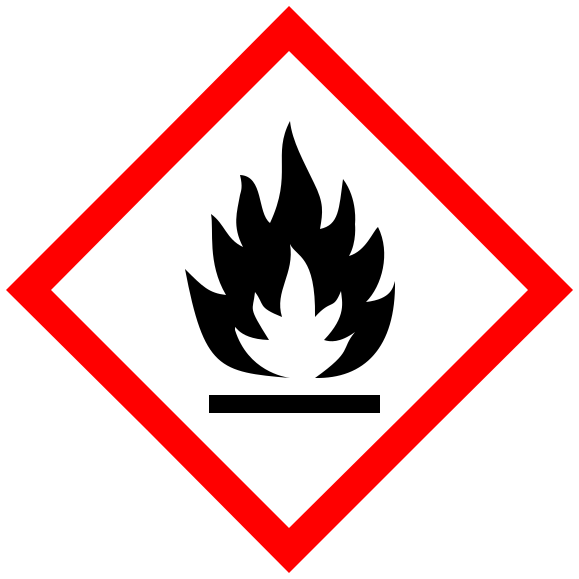
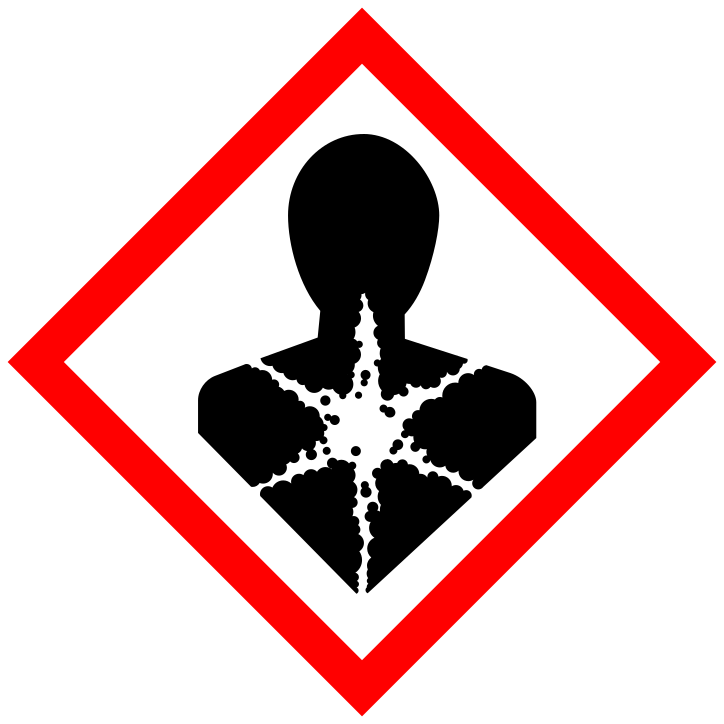
| Pictograms | 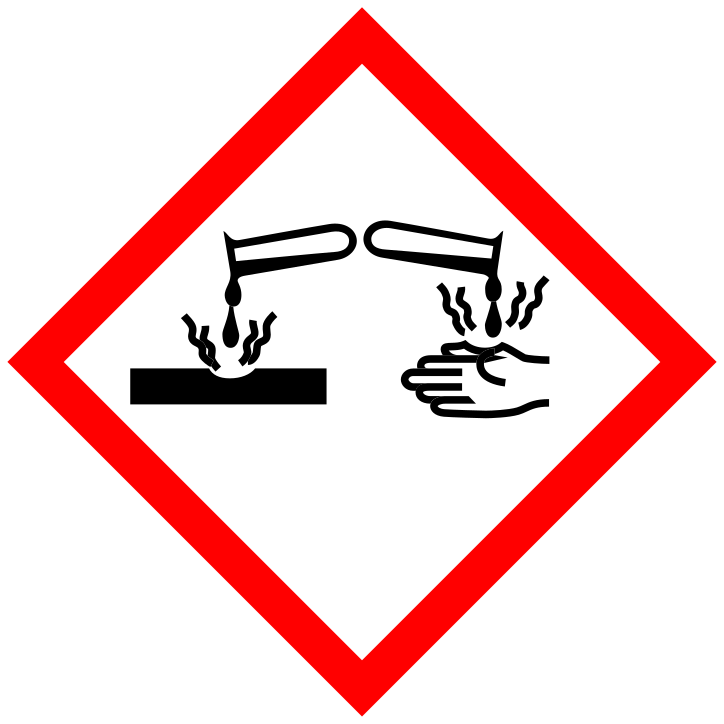  Corrosive, Harmful or irritant Corrosive, Harmful or irritant |
2. Hazards
- Skin irritation, category 2
- Serious eye damage, category 1
- Skin sensitisation, category 1B
- Specific target organ toxicity, single exposure, category 3
- H315 Causes skin irritation.
- H318 Causes serious eye damage.
- H317 May cause an allergic skin reaction.
- H335 May cause respiratory irritation.
Health effects on the day
- Red, sore or itchy skin
- Serious eye damage from a splash; can cause lasting loss of sight
- Drowsiness, dizziness or irritation of the airways
Health effects over time
- Repeated contact dries and cracks the skin and can lead to dermatitis
- Allergic skin reaction (dermatitis); once sensitised, even small contact brings it back
| Routes of exposure | skin, eyes, inhalation |
|---|---|
| Workplace exposure limit | 8 hour TWA: 10 mg/m³, Inhalable dust. The respirable fraction is 4 mg/m³. Portland cement is listed by name in EH40 Table 1 at these values. (EH40/2005) |
3. How the substance is used
| Task | Mixing mortar in a drum mixer from bagged cement and sand; laying bricks and blocks |
|---|---|
| Who is exposed | Gang of three bricklayers and one labourer |
| At particular risk | None identified |
| Frequency | Daily |
| Quantity used | 8 to 12 bags of cement per day |
| Duration | Mixing 1 hour total; laying 7 hours |
| Ventilation | Outdoors |
| Spray, heat or mist | No |
| Storage | Bags on pallets under cover, used in date order |
| Store away from | — |
4. Risk rating
| Before controls | High, 16 out of 25 (likelihood 4 × severity 4) |
|---|---|
| With controls in place | Medium, 8 out of 25 (likelihood 2 × severity 4) |
5. Control measures in place
Substitution
- We use a low dust or ready diluted form. Paste, pellet, gel, dust free powder or ready to use product instead of loose powder or concentrate, so less gets into the air.
Engineering controls
- Water suppression or on-tool extraction is used for cutting and grinding. Water fed tools, or tools connected to an M or H class vacuum, so dust is captured before it reaches the air.
- Eyewash and running water are within reach. An eyewash station or bottles, and a sink with running water, are close to where it is used and staff know where they are.
Working practices
- Staff are trained on this assessment and the safe method. Everyone who uses it has been told the hazards, the safe way to use it, the controls and what to do if something goes wrong. Training is recorded. Required by COSHH regulation 12.
- The safety data sheet is available to staff. The current data sheet is kept where staff and first aiders can find it, and is checked when the product or supplier changes.
- It is stored safely. Original labelled containers, closed, upright, in a cool ventilated place away from incompatible substances, food and public access.
- We clean up with a vacuum or wet methods, never dry sweeping. An M or H class vacuum or wet cleaning is used. Dry sweeping and compressed air are not used because they put settled dust back into the air.
- Staff wash their hands after use and do not eat or drink where it is used. Hands are washed after handling and before eating, drinking or smoking. Contaminated clothing is removed.
- Health surveillance is in place. Skin checks, or a breathing questionnaire and lung function tests through an occupational health provider, as COSHH regulation 11 requires for this hazard.
Personal protective equipment
- Staff wear chemical resistant gloves. Of the material and breakthrough time given in section 8 of the data sheet, replaced when damaged or contaminated.
- Staff wear eye protection. Goggles to EN 166 where there is a risk of splashing. Safety glasses are not relied on for corrosive liquids.
- Staff wear respiratory protection. RPE with the filter type in the data sheet. Tight fitting masks have been face fit tested. Follows HSE guidance HSG53.
6. Decisions
| Substitution considered | — |
|---|---|
| Exposure adequately controlled | — |
| Health surveillance | — |
| Exposure monitoring | — |
7. Further action required
None identified at this revision.
8. First aid, spillage and disposal
Skin: wash with plenty of water, remove contaminated clothing and boots, seek medical attention for burns. Eyes: rinse for at least 15 minutes and go to A&E. In an emergency call 999. For advice call NHS 111.
| Spillage | Follow section 6 of the safety data sheet. |
|---|---|
| Disposal | Follow section 13 of the safety data sheet. Waste leaves site as hazardous waste through a licensed carrier. |
9. Notes
Ready mixed mortar used where the programme allows. No kneeling in mortar; knee pads and boards provided. Cement washed off skin immediately. Skin checks recorded monthly.
Hazard data from the ECHA classification and labelling inventory and HSE EH40/2005. Check the supplier safety data sheet for the exact product and concentration you use. Review by the next review date, and sooner if the product or supplier changes, the task or the people doing it change, there is a spill or incident, anyone reports symptoms, or new information arrives from the supplier or HSE. This assessment is a starting point; the employer must review it against the actual workplace before relying on it.