COSHH

COSHH for cleaning products

Almost every product on a cleaning trolley is covered by COSHH. Bleach, descaler, oven cleaner, disinfectant and even some washing up liquids carry hazard labels, and each needs an assessment before staff use it.

Free, no signup. Follows the COSHH Regulations 2002, regulations 6 and 7.

Last reviewed 2 September 2026

What the label says

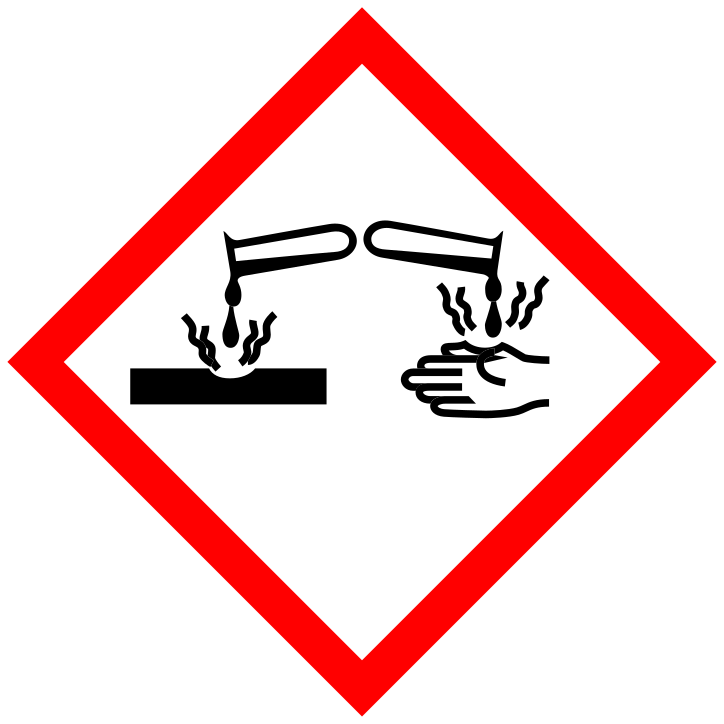
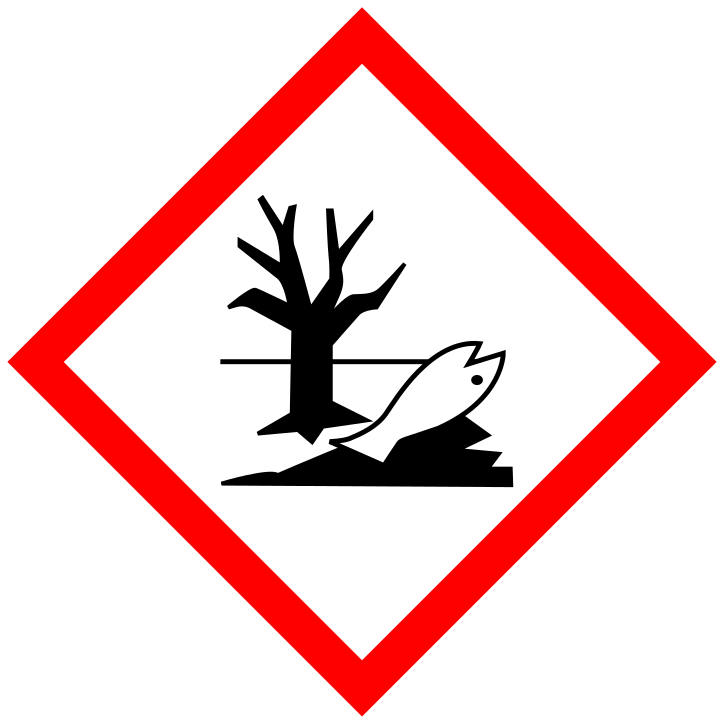
CorrosiveHazardous to the environmentdanger
  • H290May be corrosive to metals.
  • H314Causes severe skin burns and eye damage.
  • and 3 more

How risky it is

Before controlsMedium 12/25
After controlsLow 4/25

11 controls in place

Next review2 September 2027
OutputPDF, numbered and dated

What keeps staff safe

  • We use the lowest hazard product that does the job
  • Eyewash and running water are within reach
  • Staff are trained on this assessment and the safe method
  • The safety data sheet is available to staff

7 more in the completed example. Listed in the order the law prefers: change the product or the process first, protective equipment last.

See the completed bleach assessment

The assessments a cleaning business needs

Seven product groups cover most cleaning work. Start each one in the generator. Where the product is in our index, the hazards, pictograms and exposure limit are already filled in; otherwise the generator takes them from the label.

  1. 1Thick bleachSodium hypochloriteCorrosive to eyes and skin. Gives off chlorine gas if it meets descaler or toilet cleaner.Read the completed exampleCorrosiveHazardous to the environmentStart, hazards filled in
  2. 2Toilet cleaner and descalerAn acid: usually citric, sulphamic, phosphoric or hydrochloricStrength varies a lot between products. Read section 2 of the data sheet, and never use in the same session as bleach.Start from the label
  3. 3Oven and grill cleanerSodium hydroxideCaustic. Burns skin and eyes on contact, and the spray reaches the face. The highest risk product most cleaners handle.Read the completed exampleCorrosiveStart, hazards filled in
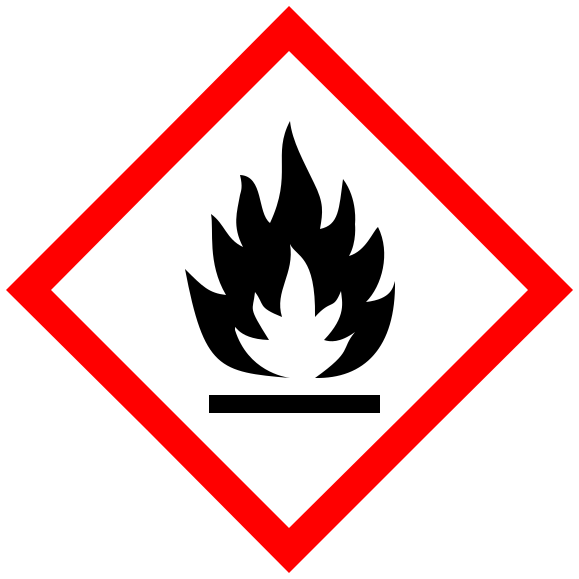
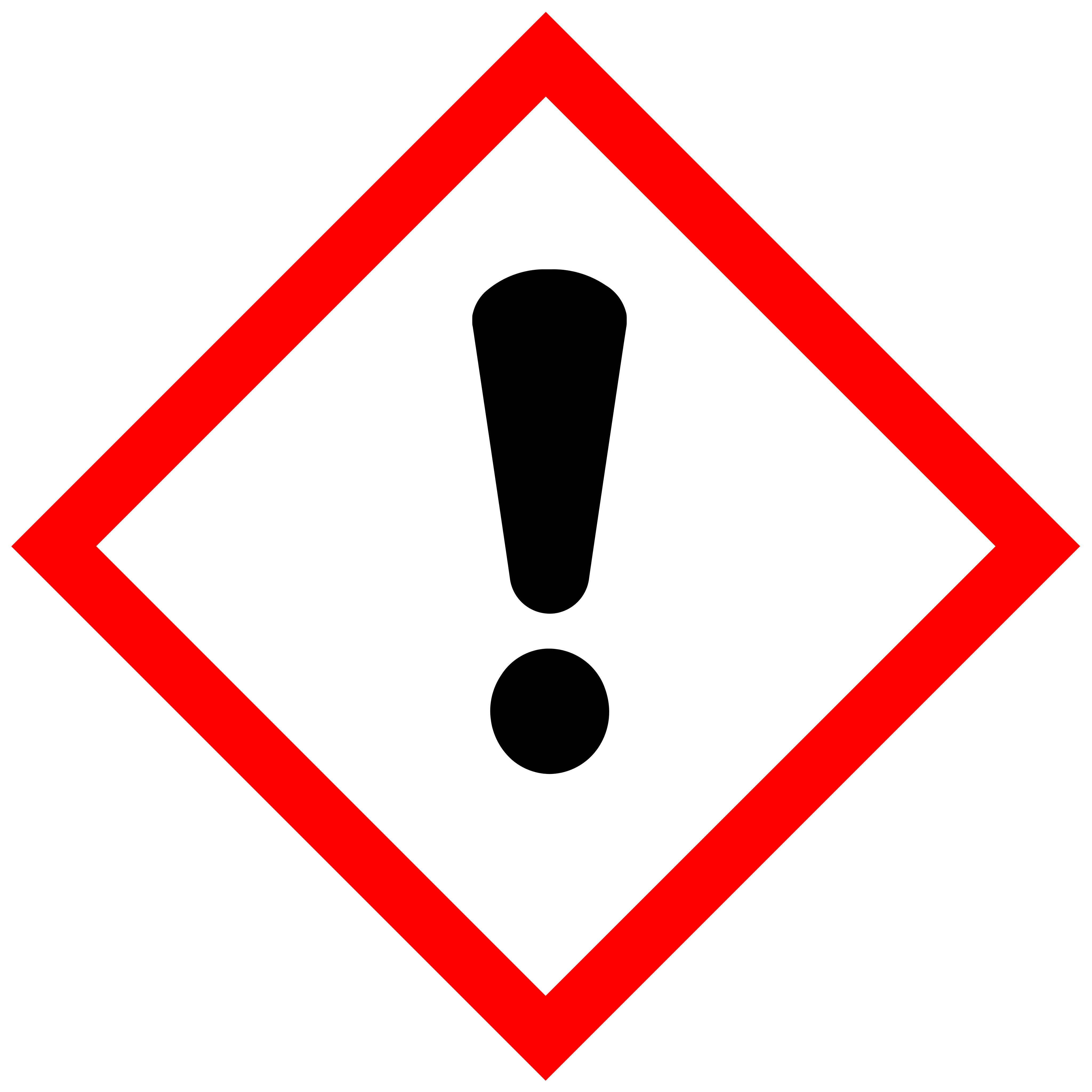
  4. 4Alcohol surface spray and hand gelIsopropanol or ethanolFlammable and an eye irritant. Keep away from heat, and away from residents or pupils who might drink it.Read the completed exampleFlammableHarmful or irritantStart, hazards filled in
  5. 5Disinfectant and sanitiserUsually quaternary ammonium compoundsConcentrate is often corrosive or a skin sensitiser; the diluted spray is milder. Assess the concentrate and the dilution.Start from the label
  6. 6Floor cleaner and degreaserAlkaline detergents, sometimes with solventsIrritant at concentrate strength in most products. A dosing unit or measured cap removes most of the handling risk.Start from the label
  7. 7Glass cleaner and washing up liquidMild detergents, sometimes a little alcoholUsually low hazard. If the label has no pictogram, a short assessment still records that you checked.Start from the label

Use a product not listed here? Start from its label, or search the templates index.

Four things an inspector finds, and the fix

HSE and environmental health officers see the same failures in cleaning again and again. None of them needs equipment to put right.

  • Concentrate in unlabelled bottles

    Every spray bottle carries the product name and the hazard pictogram. Buy pre-printed bottles or print labels.

  • Products mixed together

    Bleach with an acid gives off chlorine. One product at a time, rinse between them, and say so in the assessment.

  • No gloves for corrosive products

    Nitrile or household gloves for bleach, oven cleaner and neat descaler. Section 8 of the data sheet names the type.

  • No assessment at all

    One assessment per product per task. The generator fills in the hazards; you add where, how and who.

Working alone, out of hours. Cleaners often work when nobody else is on site, so the assessment must say what to do if something goes wrong: where the eyewash is, who to call, and where the data sheets are kept. The generator asks for all three under site details, and prints them on every assessment.

Cleaning colour codes

Cloths, mops, buckets and gloves are colour coded so equipment used on a toilet is never used in a kitchen. It is infection control practice, not a COSHH requirement, but the assessment for each product should record which colour it is used with.

The chart shows the British Institute of Cleaning Science scheme, which most cleaning companies use. Hospitals and many care homes use the NHS scheme, which differs on yellow. Use the one your site or client has adopted.

One page A4 for the wall of the cleaning cupboard. Your logo goes on it if you have added one in the generator.

  • Red

    Sanitary appliances and washroom floors

    Toilets, urinals and the floors around them. The highest contamination risk, so red equipment never leaves the washroom.

    NHS scheme: Bathrooms, washrooms, showers, toilets, basins and bathroom floors.

  • Yellow

    Washbasins and other washroom surfaces

    Hand basins, taps, mirrors, tiles and cubicle walls in washrooms. Kept apart from red so the basin is not cleaned with the toilet cloth.

    NHS scheme: Isolation areas only. Basins in washrooms are red under the NHS scheme.

  • Blue

    General areas

    Offices, classrooms, corridors, reception, furniture, walls and floors in low risk areas.

    NHS scheme: General areas including wards, departments, offices and basins in public areas.

  • Green

    Food preparation and kitchen areas

    Kitchens, food storage, canteens and bar areas. Green equipment is used nowhere else.

    NHS scheme: Catering departments, ward kitchen areas and patient food service at ward level.

Completed cleaning COSHH assessment examples

Real products, real tasks, controls in hierarchy order. Open one in the generator and change the site details to make it yours.

Bleach used for cleaning toilets and washrooms

Thick bleach is sodium hypochlorite at around 5 per cent. It is corrosive to eyes and skin, and it gives off chlorine gas if it meets an acid such as a descaler or toilet cleaner. This example covers a cleaner using it in washrooms at the end of the day. Draft, not yet reviewed.

Why these controls

The two controls that matter most are keeping bleach away from acidic products, and never decanting it into unlabelled bottles. Most bleach incidents in cleaning are one of those two things.

Gloves and goggles are listed as PPE, which is the last step in the hierarchy. They are needed because the task involves pouring neat bleach, but the earlier controls, such as using a ready diluted product or a dosing pump, remove more of the risk.

The residual rating is low because the quantity is small and the task is short. A cleaner using a pressure sprayer with diluted bleach in an enclosed shower room would need a different assessment with ventilation and RPE considered.

COSHH assessment

Control of Substances Hazardous to Health Regulations 2002, regulation 6

Assessment numberCOSHH-004
Revision1
Date of assessment2 September 2026
Last reviewed2 September 2026
Next review2 September 2027
Company or siteBrightside Cleaning Services Ltd
LocationStaff and customer washrooms
AssessorKaren Doyle, Cleaning Supervisor
Reviewed byKaren Doyle, Cleaning Supervisor
Approved by

1. Substance

NameSodium hypochlorite (bleach, hypochlorite solution, chlorine bleach)
CAS number7681-52-9
Supplier
Quantity held on site
Physical formliquid
Safety data sheetNot attached. Obtain the current sheet from the supplier and keep it with this assessment.
Signal wordDANGER
PictogramsCorrosiveHazardous to the environment Corrosive, Hazardous to the environment

2. Hazards

  • Skin corrosion, category 1B
  • Serious eye damage, category 1
  • Corrosive to metals, category 1
  • Hazardous to the aquatic environment, acute category 1
  • Hazardous to the aquatic environment, chronic category 1
  • H290 May be corrosive to metals.
  • H314 Causes severe skin burns and eye damage.
  • H318 Causes serious eye damage.
  • H400 Very toxic to aquatic life.
  • H410 Very toxic to aquatic life with long lasting effects.
  • EUH031 Contact with acids liberates toxic gas.

Health effects on the day

  • Chemical burns to skin and eyes on contact; damage can be permanent
  • Serious eye damage from a splash; can cause lasting loss of sight
  • Corrodes metal containers, fittings and surfaces
  • Very toxic to fish and water life if it reaches a drain or watercourse

Health effects over time

  • Long lasting harm to water life if it reaches a drain or watercourse
Routes of exposureskin, eyes, inhalation, ingestion
Workplace exposure limitNo WEL recorded in this library entry. Check SDS section 8 and EH40; exposure must still be controlled.

3. How the substance is used

TaskCleaning toilets, urinals and washroom floors with thick bleach at the end of the day
Who is exposedOne cleaner. No other staff or public present during cleaning. Employees
At particular riskPeople with existing skin conditions
FrequencyDaily
Quantity usedAbout 100 ml of neat bleach per washroom, poured from a 750 ml bottle
Duration15 to 20 minutes per washroom
VentilationGood, windows or mechanical ventilation
Spray, heat or mistNo
StorageLocked cleaning cupboard, original bottles, on a low shelf away from descaler and toilet cleaner
Store away fromAcids, descaler, toilet cleaner, ammonia

4. Risk rating

Before controlsMedium, 12 out of 25 (likelihood 3 × severity 4)
With controls in placeLow, 4 out of 25 (likelihood 1 × severity 4)

5. Control measures in place

Substitution

  • We use the lowest hazard product that does the job. The supplier has confirmed there is no safer alternative, or we have already switched to one, for example a lower concentration or a water based product.

Engineering controls

  • Eyewash and running water are within reach. An eyewash station or bottles, and a sink with running water, are close to where it is used and staff know where they are.

Working practices

  • Staff are trained on this assessment and the safe method. Everyone who uses it has been told the hazards, the safe way to use it, the controls and what to do if something goes wrong. Training is recorded. Required by COSHH regulation 12.
  • The safety data sheet is available to staff. The current data sheet is kept where staff and first aiders can find it, and is checked when the product or supplier changes.
  • It is stored safely. Original labelled containers, closed, upright, in a cool ventilated place away from incompatible substances, food and public access.
  • It is diluted as the label says and never mixed with other products. Dilution follows the label. Products are used one at a time. Every decanted container is labelled with the product name and hazard.
  • It is kept apart from acids and other cleaners. Stored and used separately from acidic products such as descalers and toilet cleaners, because mixing releases toxic gas.
  • Staff wash their hands after use and do not eat or drink where it is used. Hands are washed after handling and before eating, drinking or smoking. Contaminated clothing is removed.
  • There is a spill kit and a written spill procedure. Staff know how to deal with a spill, a kit is available, and waste goes out as hazardous waste through a licensed carrier.

Personal protective equipment

  • Staff wear chemical resistant gloves. Of the material and breakthrough time given in section 8 of the data sheet, replaced when damaged or contaminated.
  • Staff wear eye protection. Goggles to EN 166 where there is a risk of splashing. Safety glasses are not relied on for corrosive liquids.

6. Decisions

Substitution consideredConsidered. A chlorine free sanitiser is used where disinfection is not needed; bleach is kept for toilets and drains where nothing weaker works.
Exposure adequately controlledYes. Small quantity, short task, washroom door open, gloves and goggles worn.
Health surveillanceNot required. Not a sensitiser. Cleaners are asked to report any skin problems.
Exposure monitoringNot required. No exposure limit for hypochlorite; chlorine release is prevented by keeping it away from acids.

7. Further action required

  • Fit a pump dispenser to the bleach so cleaners stop pouring neat product. Owner: cleaning supervisor. By end of month.

8. First aid, spillage and disposal

Skin: remove contaminated clothing and rinse with plenty of water. Eyes: rinse for at least 15 minutes and get medical attention. Swallowed: rinse mouth, do not induce vomiting, call NHS 111. In an emergency call 999. For advice call NHS 111.

SpillageSmall spills mopped with plenty of water. Larger spills contained with the spill kit and the area ventilated. Supervisor told.
DisposalDiluted residue to drain with plenty of water. Empty bottles rinsed and recycled. Unused concentrate to the council hazardous waste collection.

9. Notes

Washroom door propped open while cleaning. Bleach is not used in the same session as descaler.

Hazard data from the ECHA classification and labelling inventory and HSE EH40/2005. Check the supplier safety data sheet for the exact product and concentration you use. Review by the next review date, and sooner if the product or supplier changes, the task or the people doing it change, there is a spill or incident, anyone reports symptoms, or new information arrives from the supplier or HSE. This assessment is a starting point; the employer must review it against the actual workplace before relying on it.

Caustic oven cleaner in a commercial kitchen

Professional oven cleaners are sodium hydroxide solutions or gels strong enough to cause deep burns within minutes. This example covers a kitchen porter cleaning ovens and grills after service. Draft, not yet reviewed.

Why these controls

The assessment treats splashes to the eyes as the worst credible outcome, which is why the severity stays high even with controls in place. Goggles, not safety glasses, and an eyewash bottle in the kitchen are non negotiable.

Ventilation matters because the product is usually applied to a warm oven, which drives caustic mist into the air. Extraction on, oven cool enough to touch, and the door open are the practical controls.

Where the kitchen has a dishwasher with automatic dosing, the same principle applies to oven cleaning: a foaming trigger spray removes the pouring step and most of the splash risk compared with a bulk container.

COSHH assessment

Control of Substances Hazardous to Health Regulations 2002, regulation 6

Assessment numberCOSHH-002
Revision1
Date of assessment2 September 2026
Last reviewed2 September 2026
Next review2 September 2027
Company or siteThe Copper Kettle Café
LocationMain kitchen, oven and grill section
AssessorTom Reeves, Head Chef
Reviewed byTom Reeves, Head Chef
Approved by

1. Substance

NameSodium hydroxide (caustic soda, lye, oven cleaner)
CAS number1310-73-2
Supplier
Quantity held on site
Physical formliquid
Safety data sheetNot attached. Obtain the current sheet from the supplier and keep it with this assessment.
Signal wordDANGER
PictogramsCorrosive Corrosive

2. Hazards

  • Skin corrosion, category 1A
  • Corrosive to metals, category 1
  • H290 May be corrosive to metals.
  • H314 Causes severe skin burns and eye damage.

Health effects on the day

  • Chemical burns to skin and eyes on contact; damage can be permanent
  • Corrodes metal containers, fittings and surfaces
Routes of exposureskin, eyes, inhalation, ingestion
Workplace exposure limit15 minute STEL: 2 mg/m³ (EH40/2005)

3. How the substance is used

TaskSpraying and wiping oven interiors and grill plates with caustic cleaner after evening service
Who is exposedKitchen porter. Chefs finishing cleaning nearby
At particular riskNone identified
FrequencyDaily
Quantity usedAbout 200 ml of ready to use product per oven from a trigger spray
Duration30 to 40 minutes
VentilationGood, windows or mechanical ventilation
Spray, heat or mistYes
StorageChemical cupboard under the pot wash, original containers, separate from acids
Store away from

4. Risk rating

Before controlsHigh, 16 out of 25 (likelihood 4 × severity 4)
With controls in placeMedium, 8 out of 25 (likelihood 2 × severity 4)

5. Control measures in place

Substitution

  • We use the lowest hazard product that does the job. The supplier has confirmed there is no safer alternative, or we have already switched to one, for example a lower concentration or a water based product.

Engineering controls

  • The area is well ventilated while it is used. Windows or doors open, or mechanical ventilation running. It is not used in small enclosed rooms without extraction.
  • Concentrate is dosed by pump or sealed cartridge. Staff do not pour or measure concentrate by hand. Dosing units, pump dispensers or sealed cartridges are used.
  • Eyewash and running water are within reach. An eyewash station or bottles, and a sink with running water, are close to where it is used and staff know where they are.

Working practices

  • Staff are trained on this assessment and the safe method. Everyone who uses it has been told the hazards, the safe way to use it, the controls and what to do if something goes wrong. Training is recorded. Required by COSHH regulation 12.
  • The safety data sheet is available to staff. The current data sheet is kept where staff and first aiders can find it, and is checked when the product or supplier changes.
  • It is stored safely. Original labelled containers, closed, upright, in a cool ventilated place away from incompatible substances, food and public access.
  • It is diluted as the label says and never mixed with other products. Dilution follows the label. Products are used one at a time. Every decanted container is labelled with the product name and hazard.
  • Staff wash their hands after use and do not eat or drink where it is used. Hands are washed after handling and before eating, drinking or smoking. Contaminated clothing is removed.
  • There is a spill kit and a written spill procedure. Staff know how to deal with a spill, a kit is available, and waste goes out as hazardous waste through a licensed carrier.

Personal protective equipment

  • Staff wear chemical resistant gloves. Of the material and breakthrough time given in section 8 of the data sheet, replaced when damaged or contaminated.
  • Staff wear eye protection. Goggles to EN 166 where there is a risk of splashing. Safety glasses are not relied on for corrosive liquids.
  • Staff wear an apron or overalls. Chemical resistant apron or overalls when handling concentrate or where splashing is likely.

6. Decisions

Substitution considered
Exposure adequately controlled
Health surveillance
Exposure monitoring

7. Further action required

None identified at this revision.

8. First aid, spillage and disposal

Skin: rinse immediately with plenty of water for at least 15 minutes and get medical attention. Eyes: rinse for at least 15 minutes and go to A&E. Swallowed: rinse mouth, do not induce vomiting, call 999. In an emergency call 999. For advice call NHS 111.

SpillageFollow section 6 of the safety data sheet.
DisposalFollow section 13 of the safety data sheet. Waste leaves site as hazardous waste through a licensed carrier.

9. Notes

Oven must be cool to the touch before cleaning. Extraction canopy on throughout. Eyewash bottle on the wall by the pot wash, checked monthly.

Hazard data from the ECHA classification and labelling inventory and HSE EH40/2005. Check the supplier safety data sheet for the exact product and concentration you use. Review by the next review date, and sooner if the product or supplier changes, the task or the people doing it change, there is a spill or incident, anyone reports symptoms, or new information arrives from the supplier or HSE. This assessment is a starting point; the employer must review it against the actual workplace before relying on it.

This document is a starting point. The employer must check it against the actual workplace, the product safety data sheet and current HSE guidance before relying on it. It is not an HSE approved document.

Substances behind the products

The hazardous ingredient in most cleaning products is one of these. Each has a data sheet page with the classification, sources and first aid, and a template with the hazards filled in.

Common questions

What does COSHH mean in cleaning?
COSHH is the Control of Substances Hazardous to Health Regulations 2002. In cleaning it means that every product with a hazard label, such as bleach, descaler, oven cleaner or disinfectant concentrate, must be assessed before staff use it, the risks controlled, and staff told what the hazards are and how to work safely.
Are cleaning products covered by COSHH?
Yes, when they carry a hazard pictogram or hazard statement on the label or in section 2 of the safety data sheet. Most bleach, descaler, oven cleaner, disinfectant and floor cleaner concentrates do. A product with no hazard classification, such as some washing up liquids, is not covered, but it is worth recording that you checked.
Is cleaning equipment covered by COSHH?
No. COSHH covers substances, not equipment. Mops, buckets, vacuum cleaners and machines fall under the Provision and Use of Work Equipment Regulations. Colour coded equipment matters for infection control and belongs in the cleaning procedure, not the COSHH assessment.
Are the cleaning colour codes a COSHH requirement?
No. Colour coding is an infection control practice from the British Institute of Cleaning Science and the NHS. It stops germs moving from toilets to kitchens on the same cloth. Your COSHH assessment can record the scheme the site uses, but it is not required by the regulations.
How many COSHH assessments does a cleaning company need?
One for each product used, for each distinct task. The same product used the same way across several sites can share an assessment with the site details changed. Six products in daily use means six assessments, not the supplier's folder of forty.
Do cleaners need COSHH training?
Yes. Regulation 12 requires information, instruction and training for anyone who may be exposed. For cleaners this means knowing what each product does, the gloves and eye protection for it, what not to mix, and what to do about a splash or spill. A short session with the assessments in hand is enough, and the register records who has had it.

COSHH in other sectors

Ready to assess your products?

Start with bleach, then work down the list. Each one takes about ten minutes.