Caustic oven cleaner in a commercial kitchen
Professional oven cleaners are sodium hydroxide solutions or gels strong enough to cause deep burns within minutes. This example covers a kitchen porter cleaning ovens and grills after service. Draft, not yet reviewed.
Opens in the generator with every field filled. Change the site details and the task, and download.
Why these controls
The assessment treats splashes to the eyes as the worst credible outcome, which is why the severity stays high even with controls in place. Goggles, not safety glasses, and an eyewash bottle in the kitchen are non negotiable.
Ventilation matters because the product is usually applied to a warm oven, which drives caustic mist into the air. Extraction on, oven cool enough to touch, and the door open are the practical controls.
Where the kitchen has a dishwasher with automatic dosing, the same principle applies to oven cleaning: a foaming trigger spray removes the pouring step and most of the splash risk compared with a bulk container.
This document is a starting point. The employer must check it against the actual workplace, the product safety data sheet and current HSE guidance before relying on it. It is not an HSE approved document.
COSHH assessment
Control of Substances Hazardous to Health Regulations 2002, regulation 6
| Company or site | The Copper Kettle Café |
|---|---|
| Location | Main kitchen, oven and grill section |
| Assessor | Tom Reeves, Head Chef |
| Reviewed by | Tom Reeves, Head Chef |
| Approved by | — |
1. Substance
| Name | Sodium hydroxide (caustic soda, lye, oven cleaner) |
|---|---|
| CAS number | 1310-73-2 |
| Supplier | — |
| Quantity held on site | — |
| Physical form | liquid |
| Safety data sheet | Not attached. Obtain the current sheet from the supplier and keep it with this assessment. |
| Signal word | DANGER |
| Pictograms | 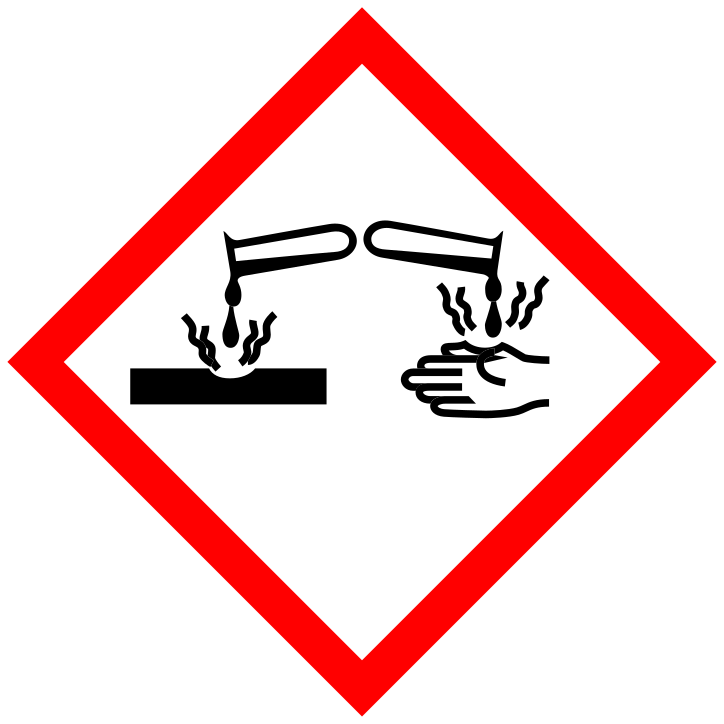 Corrosive Corrosive |
2. Hazards
- Skin corrosion, category 1A
- Corrosive to metals, category 1
- H290 May be corrosive to metals.
- H314 Causes severe skin burns and eye damage.
Health effects on the day
- Chemical burns to skin and eyes on contact; damage can be permanent
- Corrodes metal containers, fittings and surfaces
| Routes of exposure | skin, eyes, inhalation, ingestion |
|---|---|
| Workplace exposure limit | 15 minute STEL: 2 mg/m³ (EH40/2005) |
3. How the substance is used
| Task | Spraying and wiping oven interiors and grill plates with caustic cleaner after evening service |
|---|---|
| Who is exposed | Kitchen porter. Chefs finishing cleaning nearby |
| At particular risk | None identified |
| Frequency | Daily |
| Quantity used | About 200 ml of ready to use product per oven from a trigger spray |
| Duration | 30 to 40 minutes |
| Ventilation | Good, windows or mechanical ventilation |
| Spray, heat or mist | Yes |
| Storage | Chemical cupboard under the pot wash, original containers, separate from acids |
| Store away from | — |
4. Risk rating
| Before controls | High, 16 out of 25 (likelihood 4 × severity 4) |
|---|---|
| With controls in place | Medium, 8 out of 25 (likelihood 2 × severity 4) |
5. Control measures in place
Substitution
- We use the lowest hazard product that does the job. The supplier has confirmed there is no safer alternative, or we have already switched to one, for example a lower concentration or a water based product.
Engineering controls
- The area is well ventilated while it is used. Windows or doors open, or mechanical ventilation running. It is not used in small enclosed rooms without extraction.
- Concentrate is dosed by pump or sealed cartridge. Staff do not pour or measure concentrate by hand. Dosing units, pump dispensers or sealed cartridges are used.
- Eyewash and running water are within reach. An eyewash station or bottles, and a sink with running water, are close to where it is used and staff know where they are.
Working practices
- Staff are trained on this assessment and the safe method. Everyone who uses it has been told the hazards, the safe way to use it, the controls and what to do if something goes wrong. Training is recorded. Required by COSHH regulation 12.
- The safety data sheet is available to staff. The current data sheet is kept where staff and first aiders can find it, and is checked when the product or supplier changes.
- It is stored safely. Original labelled containers, closed, upright, in a cool ventilated place away from incompatible substances, food and public access.
- It is diluted as the label says and never mixed with other products. Dilution follows the label. Products are used one at a time. Every decanted container is labelled with the product name and hazard.
- Staff wash their hands after use and do not eat or drink where it is used. Hands are washed after handling and before eating, drinking or smoking. Contaminated clothing is removed.
- There is a spill kit and a written spill procedure. Staff know how to deal with a spill, a kit is available, and waste goes out as hazardous waste through a licensed carrier.
Personal protective equipment
- Staff wear chemical resistant gloves. Of the material and breakthrough time given in section 8 of the data sheet, replaced when damaged or contaminated.
- Staff wear eye protection. Goggles to EN 166 where there is a risk of splashing. Safety glasses are not relied on for corrosive liquids.
- Staff wear an apron or overalls. Chemical resistant apron or overalls when handling concentrate or where splashing is likely.
6. Decisions
| Substitution considered | — |
|---|---|
| Exposure adequately controlled | — |
| Health surveillance | — |
| Exposure monitoring | — |
7. Further action required
None identified at this revision.
8. First aid, spillage and disposal
Skin: rinse immediately with plenty of water for at least 15 minutes and get medical attention. Eyes: rinse for at least 15 minutes and go to A&E. Swallowed: rinse mouth, do not induce vomiting, call 999. In an emergency call 999. For advice call NHS 111.
| Spillage | Follow section 6 of the safety data sheet. |
|---|---|
| Disposal | Follow section 13 of the safety data sheet. Waste leaves site as hazardous waste through a licensed carrier. |
9. Notes
Oven must be cool to the touch before cleaning. Extraction canopy on throughout. Eyewash bottle on the wall by the pot wash, checked monthly.
Hazard data from the ECHA classification and labelling inventory and HSE EH40/2005. Check the supplier safety data sheet for the exact product and concentration you use. Review by the next review date, and sooner if the product or supplier changes, the task or the people doing it change, there is a spill or incident, anyone reports symptoms, or new information arrives from the supplier or HSE. This assessment is a starting point; the employer must review it against the actual workplace before relying on it.