Alcohol hand sanitiser in a care home
Hand sanitiser is used dozens of times a shift by every member of care staff, and bulk stock is a fire load. This example covers isopropanol based gel from wall dispensers and five litre refills. Draft, not yet reviewed.
Opens in the generator with every field filled. Change the site details and the task, and download.
Why these controls
The exposure that matters is skin. Repeated alcohol use dries and cracks the skin, which is both a COSHH effect and an infection control problem. Moisturiser, skin checks and a low irritant formulation are the controls.
Fire is the other issue. Five litre refills and boxes of stock need to be kept away from heat and out of resident areas, and the total quantity stored should be known and kept low.
Residents are people at risk too. Wall dispensers in corridors used by residents with dementia have led to ingestion. The assessment records where dispensers are and which are supervised.
This document is a starting point. The employer must check it against the actual workplace, the product safety data sheet and current HSE guidance before relying on it. It is not an HSE approved document.
COSHH assessment
Control of Substances Hazardous to Health Regulations 2002, regulation 6
| Company or site | Meadow View Care Home |
|---|---|
| Location | Corridors, resident rooms, sluice, kitchen entrance; stock in the housekeeping store |
| Assessor | Priya Nair, Registered Manager |
| Reviewed by | Priya Nair, Registered Manager |
| Approved by | — |
1. Substance
| Name | Isopropanol (propan-2-ol, isopropyl alcohol, IPA) |
|---|---|
| CAS number | 67-63-0 |
| Supplier | — |
| Quantity held on site | — |
| Physical form | liquid |
| Safety data sheet | Not attached. Obtain the current sheet from the supplier and keep it with this assessment. |
| Signal word | DANGER |
| Pictograms | 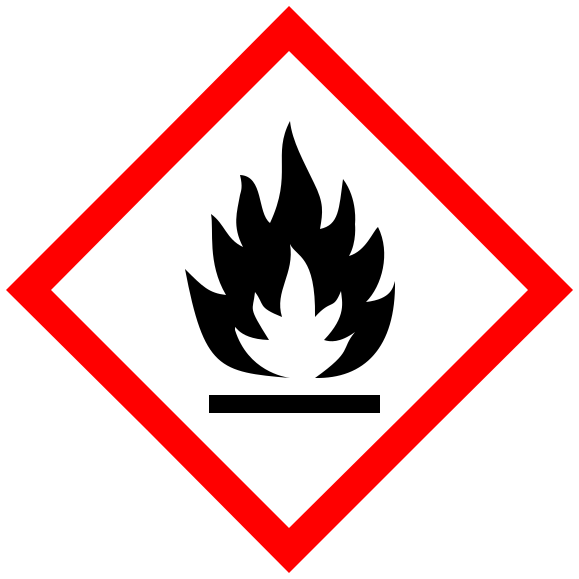 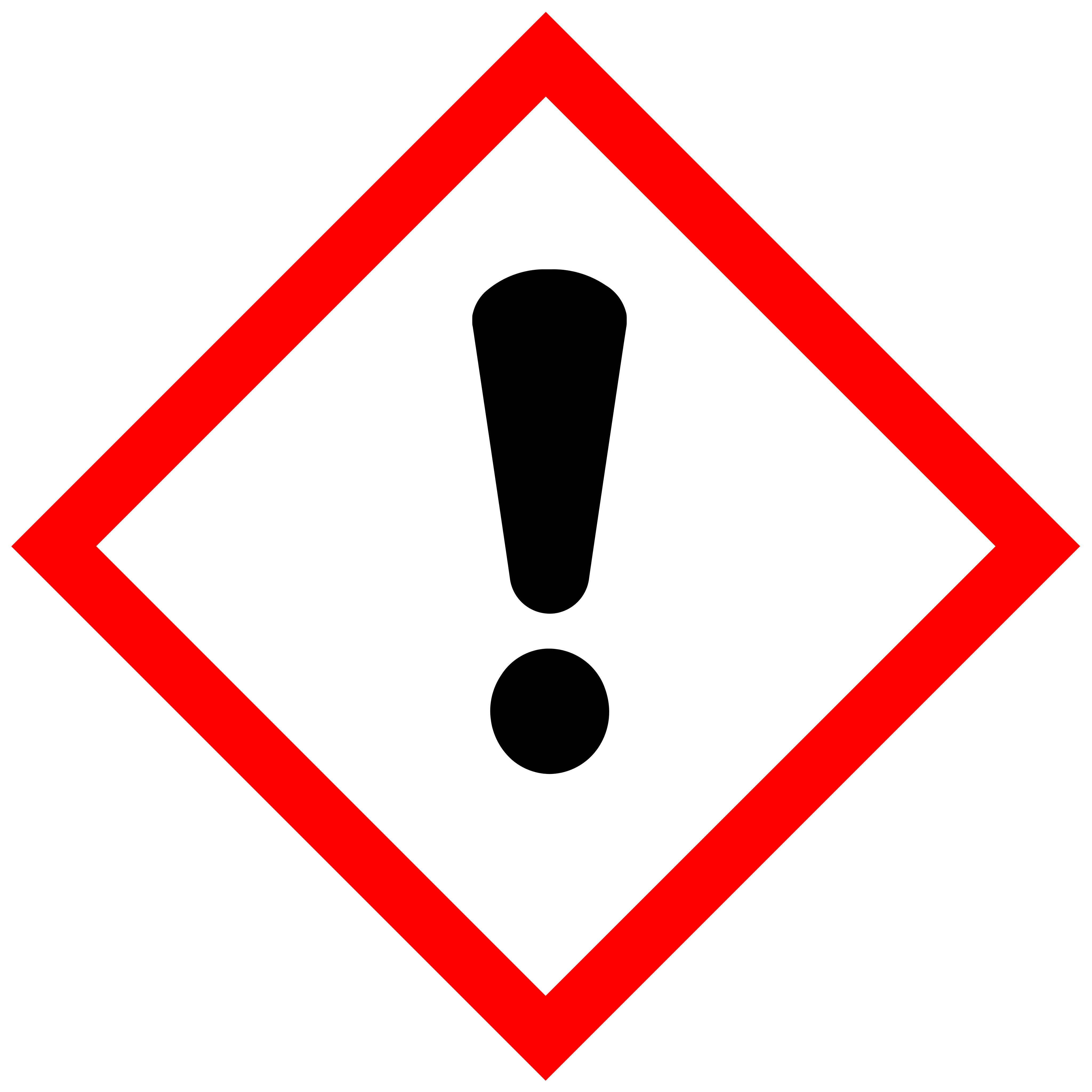 Flammable, Harmful or irritant Flammable, Harmful or irritant |
2. Hazards
- Flammable liquid, category 2
- Eye irritation, category 2
- Specific target organ toxicity, single exposure, category 3
- H225 Highly flammable liquid and vapour.
- H319 Causes serious eye irritation.
- H336 May cause drowsiness or dizziness.
Health effects on the day
- Vapour ignites easily; fire and burns
- Stinging, watering, red eyes
- Drowsiness, dizziness or irritation of the airways
| Routes of exposure | inhalation, eyes, skin |
|---|---|
| Workplace exposure limit | 8 hour TWA: 400 ppm, 999 mg/m³. 15 minute STEL: 500 ppm, 1250 mg/m³ (EH40/2005) |
3. How the substance is used
| Task | Hand decontamination between residents using gel from wall dispensers; refilling dispensers from 5 litre containers |
|---|---|
| Who is exposed | All care and domestic staff, around 20 per shift. Residents use corridor dispensers |
| At particular risk | None identified |
| Frequency | Daily |
| Quantity used | About 3 ml per use, 30 to 50 uses per person per shift; refills of 1 litre per dispenser |
| Duration | Seconds per use; refilling 10 minutes weekly |
| Ventilation | Good, windows or mechanical ventilation |
| Spray, heat or mist | No |
| Storage | Housekeeping store, no more than 20 litres, away from heaters and electrical panels |
| Store away from | — |
4. Risk rating
| Before controls | Medium, 9 out of 25 (likelihood 3 × severity 3) |
|---|---|
| With controls in place | Low, 4 out of 25 (likelihood 2 × severity 2) |
5. Control measures in place
Substitution
- We use the lowest hazard product that does the job. The supplier has confirmed there is no safer alternative, or we have already switched to one, for example a lower concentration or a water based product.
Engineering controls
- Ignition sources are kept away. No naked flames, hot surfaces, sparks or smoking where it is used or stored. Electrical equipment is suitable where flammable vapour may be present.
Working practices
- Staff are trained on this assessment and the safe method. Everyone who uses it has been told the hazards, the safe way to use it, the controls and what to do if something goes wrong. Training is recorded. Required by COSHH regulation 12.
- The safety data sheet is available to staff. The current data sheet is kept where staff and first aiders can find it, and is checked when the product or supplier changes.
- It is stored safely. Original labelled containers, closed, upright, in a cool ventilated place away from incompatible substances, food and public access.
- It is kept in a flammables cabinet. Flammable liquids are stored in a marked metal cabinet away from ignition sources, with no more than 50 litres in the workroom (HSE guidance HSG51).
- Staff wash their hands after use and do not eat or drink where it is used. Hands are washed after handling and before eating, drinking or smoking. Contaminated clothing is removed.
- Health surveillance is in place. Skin checks, or a breathing questionnaire and lung function tests through an occupational health provider, as COSHH regulation 11 requires for this hazard.
6. Decisions
| Substitution considered | — |
|---|---|
| Exposure adequately controlled | — |
| Health surveillance | — |
| Exposure monitoring | — |
7. Further action required
None identified at this revision.
8. First aid, spillage and disposal
Eyes: rinse with water for several minutes. Inhaled: move to fresh air. Swallowed: rinse mouth and call NHS 111. In an emergency call 999. For advice call NHS 111.
| Spillage | Follow section 6 of the safety data sheet. |
|---|---|
| Disposal | Follow section 13 of the safety data sheet. Waste leaves site as hazardous waste through a licensed carrier. |
9. Notes
Staff to report dry or cracked skin to the manager. Moisturiser provided at every sink. Corridor dispensers in the dementia unit replaced with supervised ones.
Hazard data from the ECHA classification and labelling inventory and HSE EH40/2005. Check the supplier safety data sheet for the exact product and concentration you use. Review by the next review date, and sooner if the product or supplier changes, the task or the people doing it change, there is a spill or incident, anyone reports symptoms, or new information arrives from the supplier or HSE. This assessment is a starting point; the employer must review it against the actual workplace before relying on it.