Petrol used to refuel mowers, strimmers and generators
Petrol is extremely flammable and is classified as a carcinogen and mutagen because of its benzene content. Most exposure at work comes from decanting and refuelling. This example covers a grounds team refuelling small plant from jerry cans. Draft, not yet reviewed.
Opens in the generator with every field filled. Change the site details and the task, and download.
Why these controls
Fire is the risk that hurts people first. Refuelling is done outdoors with the engine off and cool, away from smoking and hot work, using a pump or spouted can rather than pouring from a funnel.
Skin contact is the COSHH issue. Petrol defats the skin and is absorbed through it. Nitrile gloves for refuelling and washing off splashes straight away are the controls.
Storage is regulated separately. Without a licence a workplace can keep no more than 30 litres in approved containers, in a ventilated store away from buildings and ignition sources.
This document is a starting point. The employer must check it against the actual workplace, the product safety data sheet and current HSE guidance before relying on it. It is not an HSE approved document.
COSHH assessment
Control of Substances Hazardous to Health Regulations 2002, regulation 6
| Company or site | Greenway Grounds Maintenance |
|---|---|
| Location | Outside the equipment store; refuelling on site as needed |
| Assessor | Amy Fletcher, Grounds Team Leader |
| Reviewed by | Amy Fletcher, Grounds Team Leader |
| Approved by | — |
1. Substance
| Name | Petrol (gasoline, unleaded, fuel) |
|---|---|
| CAS number | 86290-81-5 |
| Supplier | — |
| Quantity held on site | — |
| Physical form | liquid |
| Safety data sheet | Not attached. Obtain the current sheet from the supplier and keep it with this assessment. |
| Signal word | DANGER |
| Pictograms | 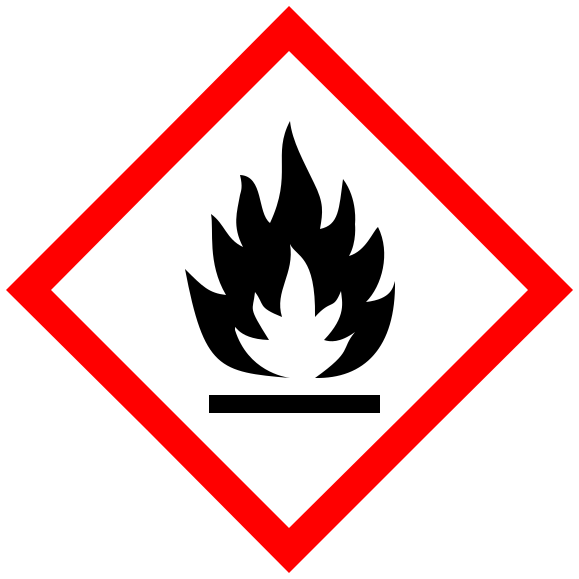  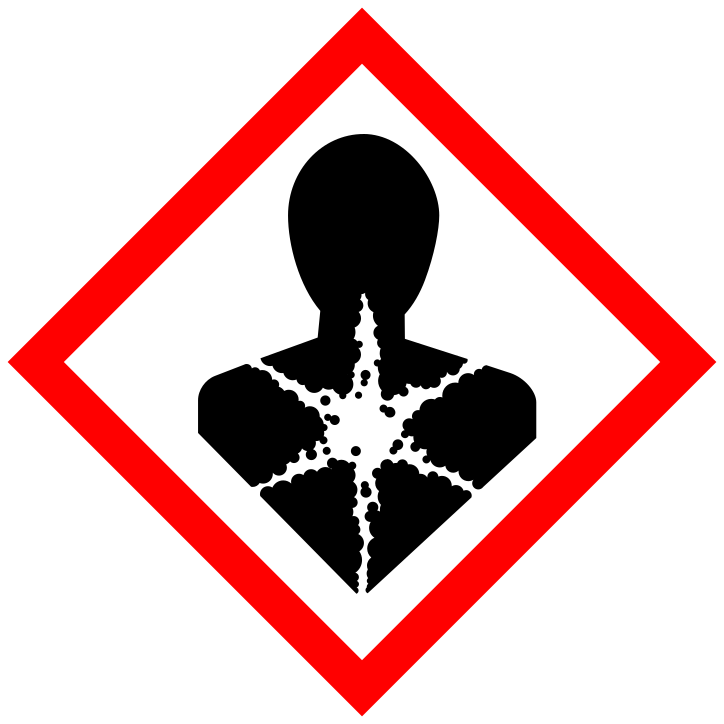 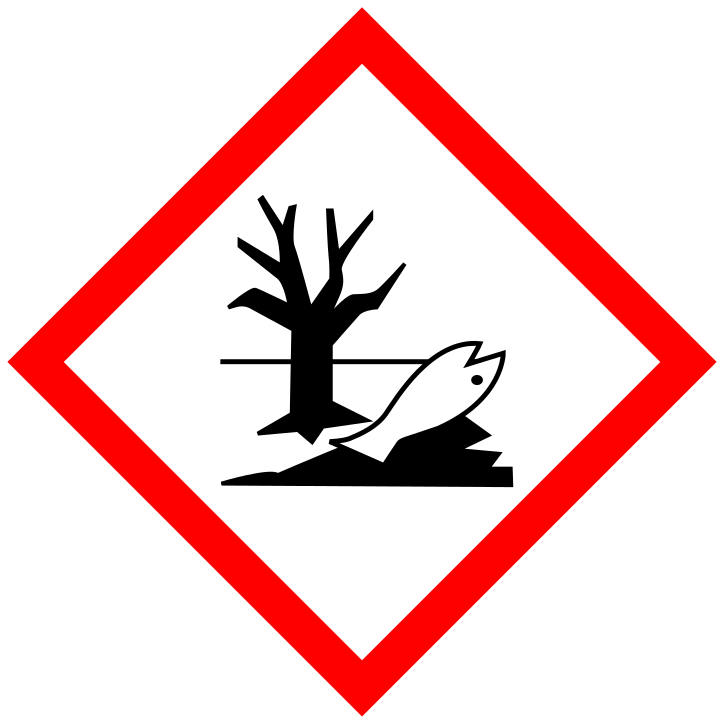 Flammable, Harmful or irritant, Serious health hazard, Hazardous to the environment Flammable, Harmful or irritant, Serious health hazard, Hazardous to the environment |
2. Hazards
- Flammable liquid, category 1
- Carcinogenicity, category 1B
- Germ cell mutagenicity, category 1B
- Aspiration hazard, category 1
- Skin irritation, category 2
- Specific target organ toxicity, single exposure, category 3
- Hazardous to the aquatic environment, chronic category 2
- H224 Extremely flammable liquid and vapour.
- H350 May cause cancer.
- H340 May cause genetic defects.
- H304 May be fatal if swallowed and enters airways.
- H315 Causes skin irritation.
- H336 May cause drowsiness or dizziness.
- H411 Toxic to aquatic life with long lasting effects.
This substance is a carcinogen or mutagen. Under COSHH regulation 7(7) exposure must be reduced as low as is reasonably practicable, not just kept below any workplace exposure limit. Health surveillance and exposure records are expected.
Health effects on the day
- Vapour ignites easily; fire and burns
- If swallowed and it enters the lungs, chemical pneumonia that can be fatal; do not make the person vomit
- Red, sore or itchy skin
- Drowsiness, dizziness or irritation of the airways
Health effects over time
- Cancer, from repeated exposure over years
- Genetic damage that can be passed on
- Repeated contact dries and cracks the skin and can lead to dermatitis
- Harm to water life if it reaches a drain or watercourse
| Routes of exposure | inhalation, skin, ingestion |
|---|---|
| Workplace exposure limit | No WEL recorded in this library entry. Check SDS section 8 and EH40; exposure must still be controlled. |
3. How the substance is used
| Task | Refuelling mowers, strimmers, blowers and a generator from 10 litre jerry cans |
|---|---|
| Who is exposed | Three grounds staff |
| At particular risk | None identified |
| Frequency | Daily |
| Quantity used | 1 to 5 litres per refuel, 20 to 30 litres per week |
| Duration | 2 to 5 minutes per refuel |
| Ventilation | Outdoors |
| Spray, heat or mist | No |
| Storage | Two 10 litre approved cans in a ventilated metal store away from the building, no more than 30 litres |
| Store away from | — |
4. Risk rating
| Before controls | High, 15 out of 25 (likelihood 3 × severity 5) |
|---|---|
| With controls in place | Low, 5 out of 25 (likelihood 1 × severity 5) |
5. Control measures in place
Substitution
- We use the lowest hazard product that does the job. The supplier has confirmed there is no safer alternative, or we have already switched to one, for example a lower concentration or a water based product.
Engineering controls
- Ignition sources are kept away. No naked flames, hot surfaces, sparks or smoking where it is used or stored. Electrical equipment is suitable where flammable vapour may be present.
Working practices
- Staff are trained on this assessment and the safe method. Everyone who uses it has been told the hazards, the safe way to use it, the controls and what to do if something goes wrong. Training is recorded. Required by COSHH regulation 12.
- The safety data sheet is available to staff. The current data sheet is kept where staff and first aiders can find it, and is checked when the product or supplier changes.
- It is stored safely. Original labelled containers, closed, upright, in a cool ventilated place away from incompatible substances, food and public access.
- It is kept in a flammables cabinet. Flammable liquids are stored in a marked metal cabinet away from ignition sources, with no more than 50 litres in the workroom (HSE guidance HSG51).
- Staff wash their hands after use and do not eat or drink where it is used. Hands are washed after handling and before eating, drinking or smoking. Contaminated clothing is removed.
- There is a spill kit and a written spill procedure. Staff know how to deal with a spill, a kit is available, and waste goes out as hazardous waste through a licensed carrier.
Personal protective equipment
- Staff wear chemical resistant gloves. Of the material and breakthrough time given in section 8 of the data sheet, replaced when damaged or contaminated.
- Staff wear eye protection. Goggles to EN 166 where there is a risk of splashing. Safety glasses are not relied on for corrosive liquids.
6. Decisions
| Substitution considered | — |
|---|---|
| Exposure adequately controlled | — |
| Health surveillance | — |
| Exposure monitoring | — |
7. Further action required
None identified at this revision.
8. First aid, spillage and disposal
Swallowed: do not induce vomiting, call 999. Skin: wash with soap and water, remove soaked clothing. Inhaled: fresh air. In an emergency call 999. For advice call NHS 111.
| Spillage | Follow section 6 of the safety data sheet. |
|---|---|
| Disposal | Follow section 13 of the safety data sheet. Waste leaves site as hazardous waste through a licensed carrier. |
9. Notes
Engine off and cool before refuelling. Spouted cans only. Battery powered equipment considered at replacement to remove petrol from the task.
Hazard data from the ECHA classification and labelling inventory and HSE EH40/2005. Check the supplier safety data sheet for the exact product and concentration you use. Review by the next review date, and sooner if the product or supplier changes, the task or the people doing it change, there is a spill or incident, anyone reports symptoms, or new information arrives from the supplier or HSE. This assessment is a starting point; the employer must review it against the actual workplace before relying on it.